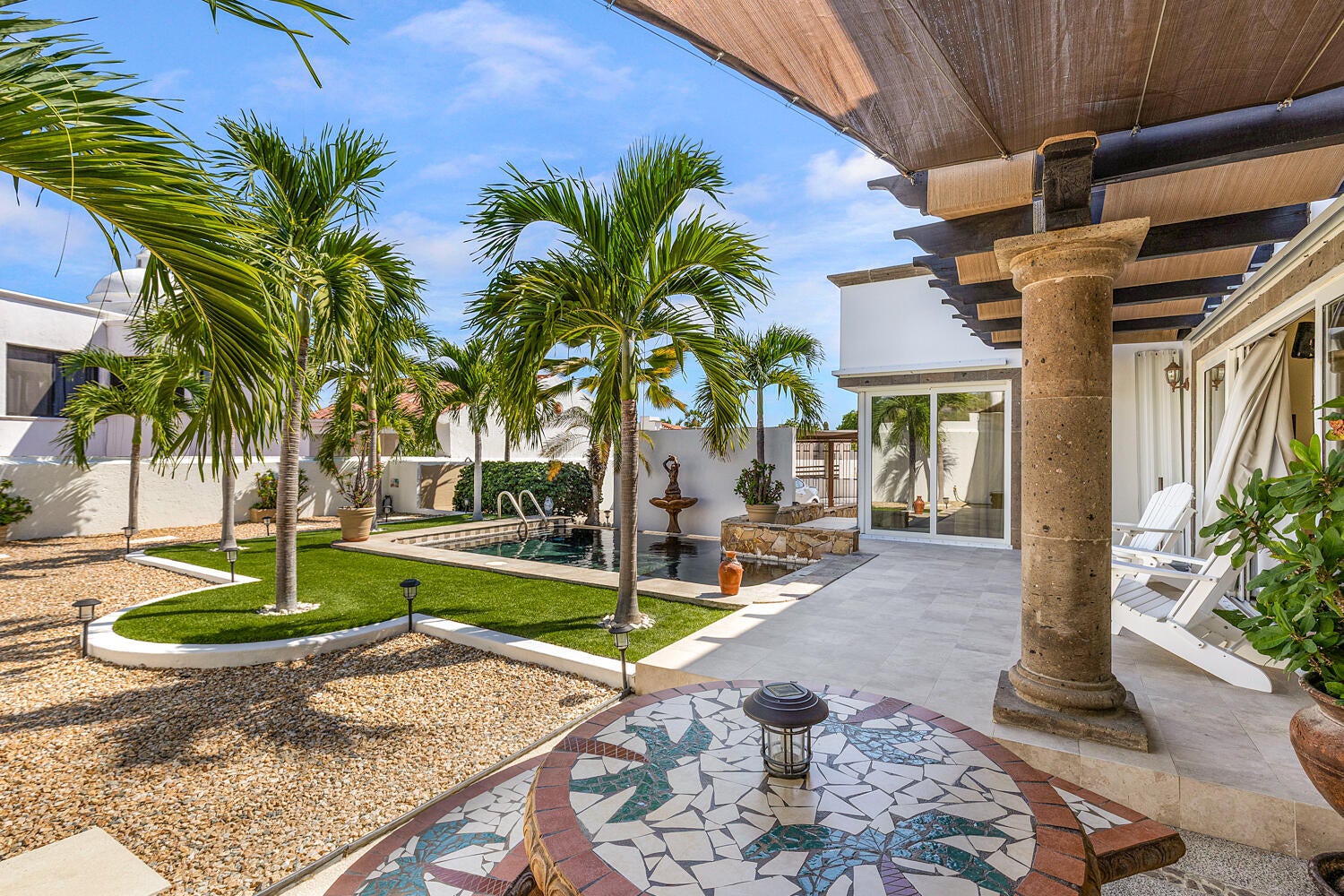
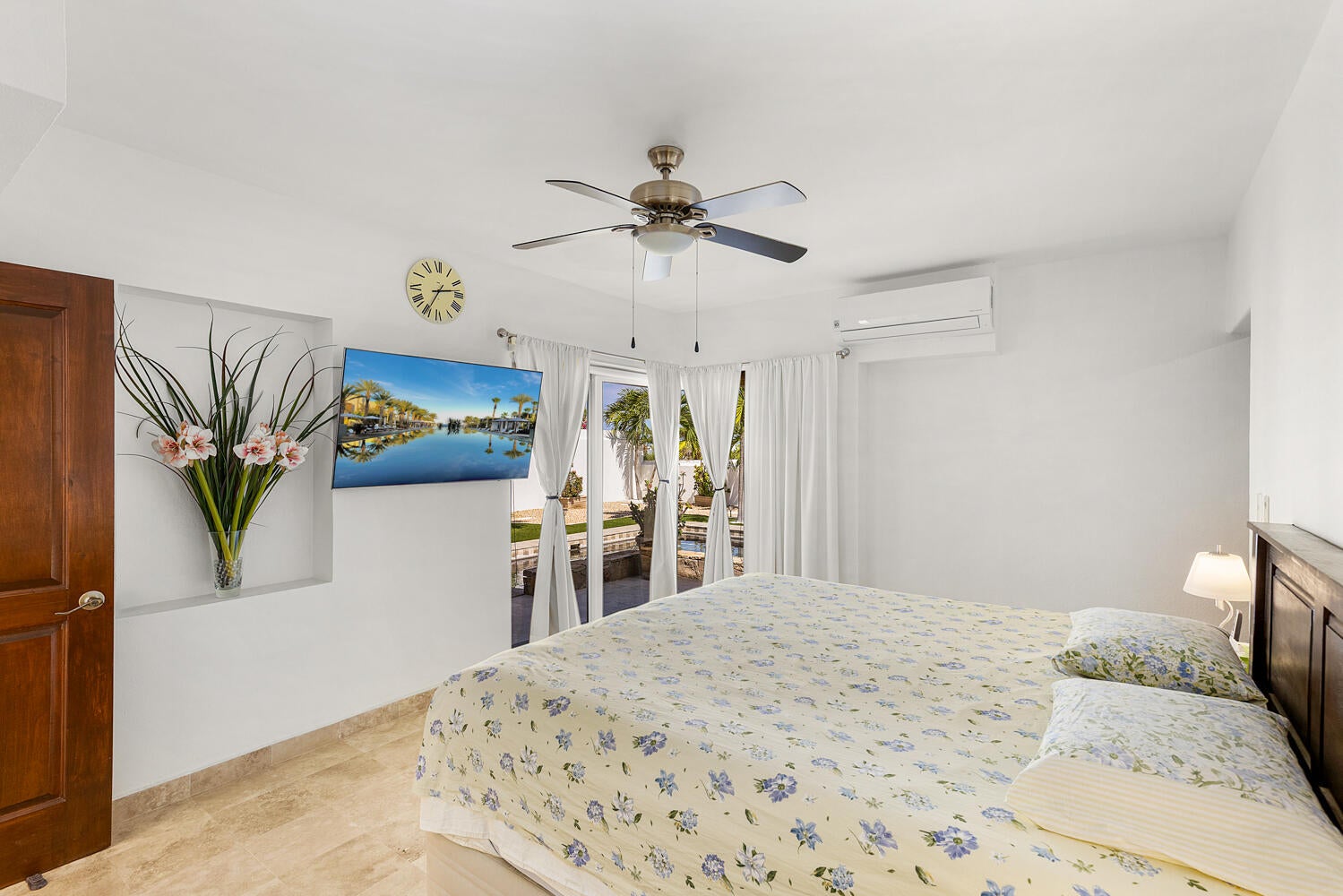
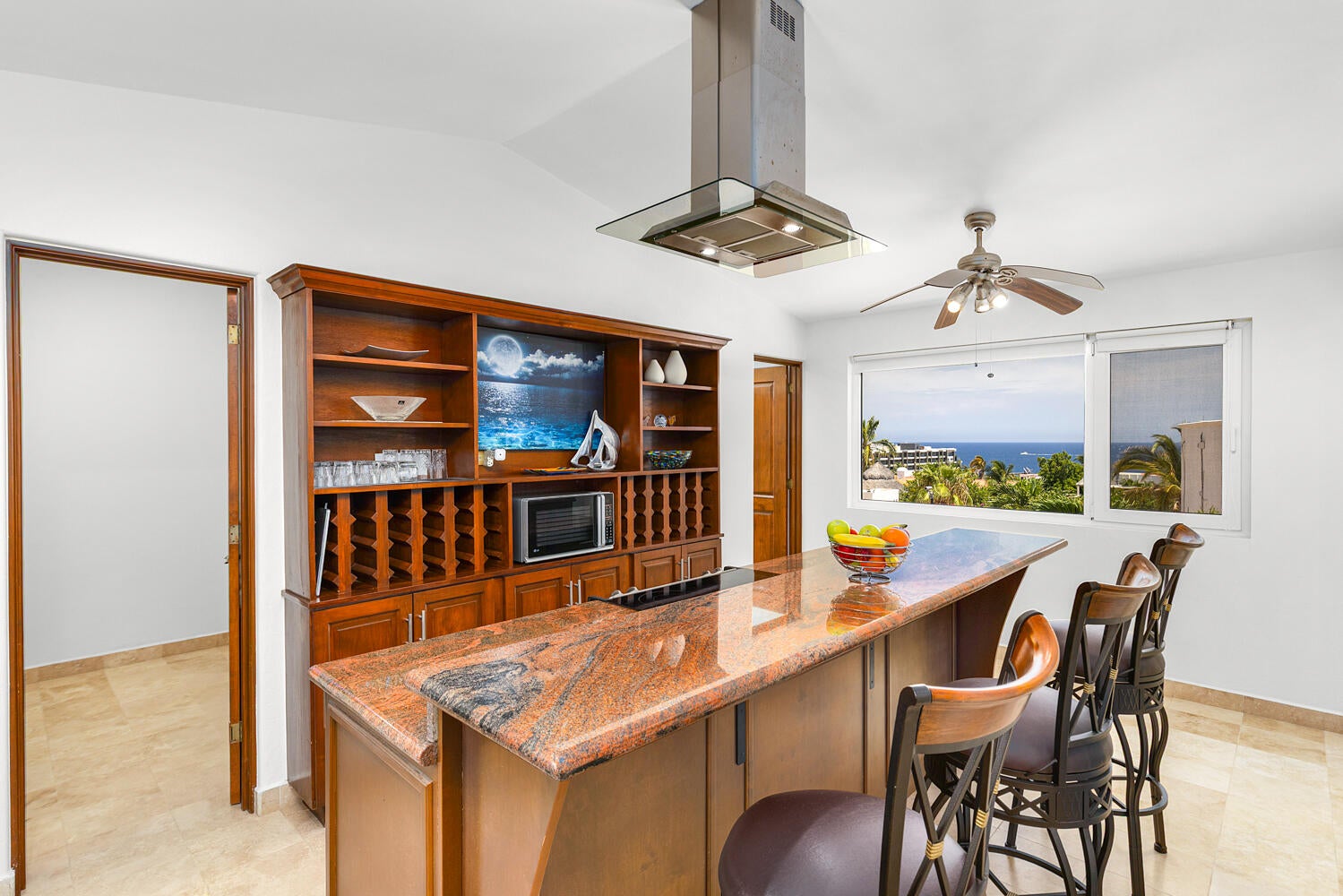
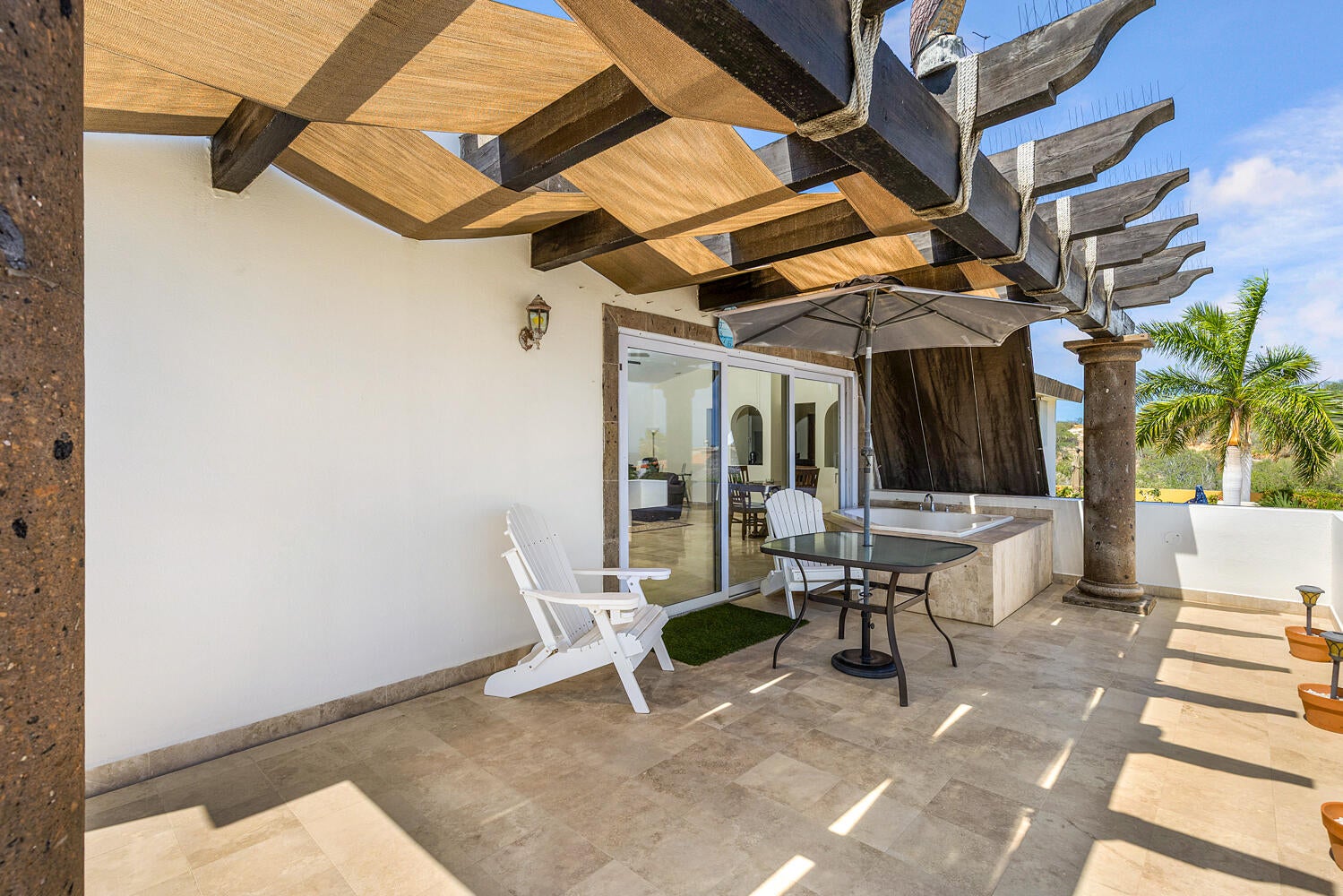
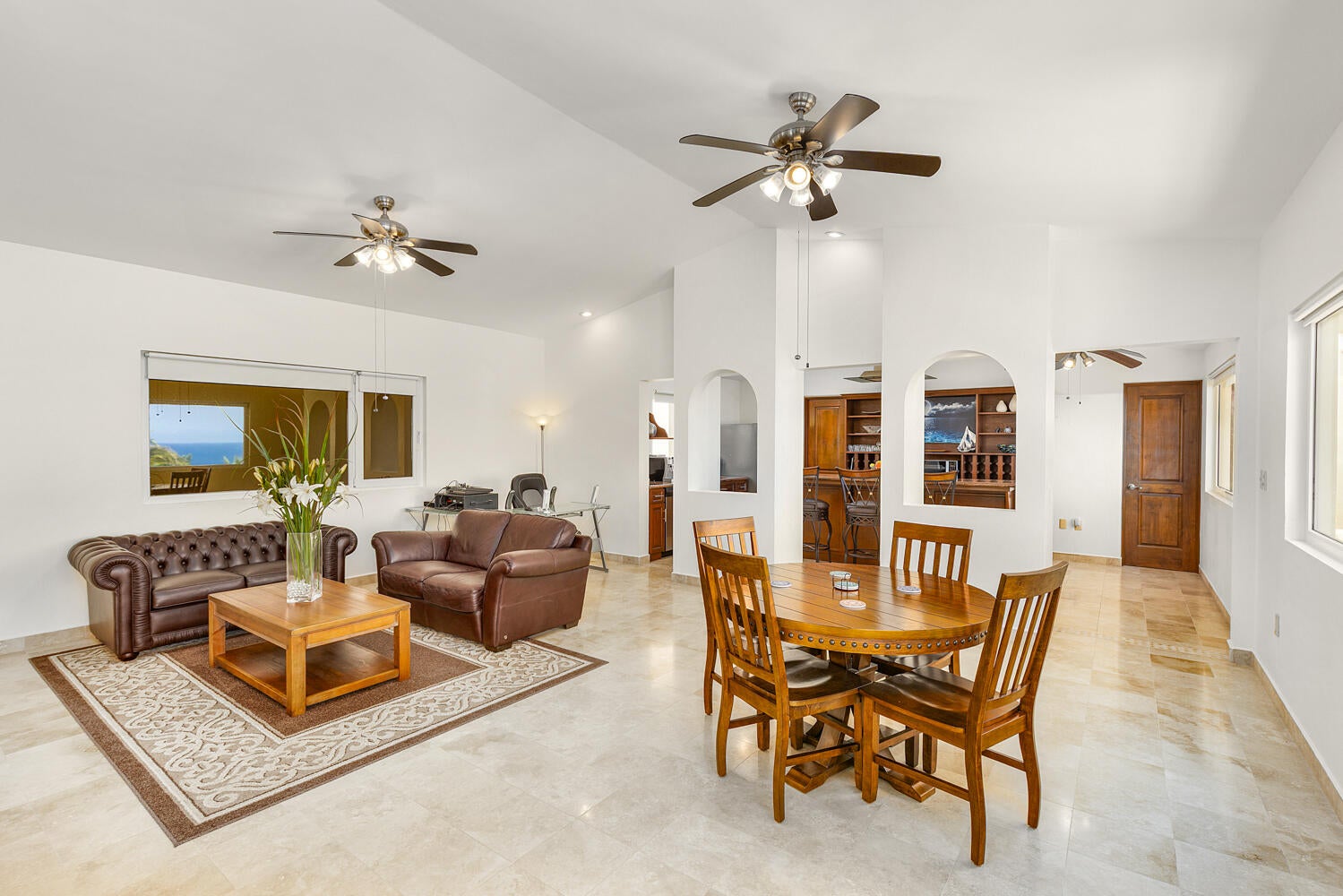
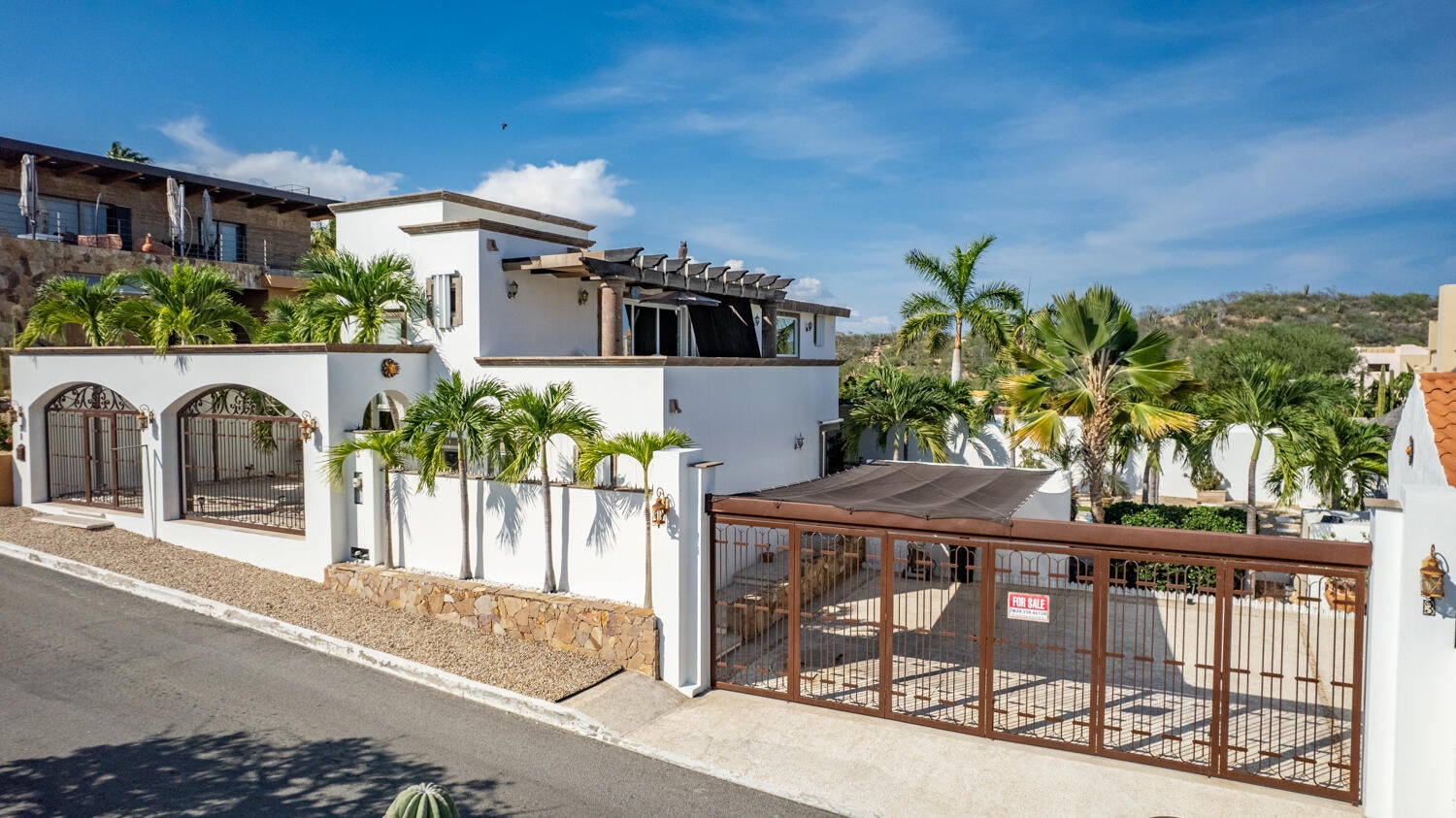
When a man builds with no exit plan, he stops cutting corners. Triple septic systems. German windows. Florida hurricane shutters. 10,000-liter water tank. Eight and a half years, full time. Now he's leaving — and everything stays.
Most homes on the Los Cabos corridor were built by developers who don't live in them. That changes what gets installed, what gets cut, and what fails — usually after you've already signed. There are two types of homes on this corridor. Most of what's listed is the first kind. This one is the other.
An Australian man bought a concrete shell in El Tule. He moved in. Then he just started doing things right.
He did all of this because he was the one living there. Not building for a buyer. Building for himself.
"When a man builds with no exit plan, he stops asking 'what's the minimum I can get away with?' and starts asking 'what's the right way to do this?' You feel the difference the moment you walk through the door."
He never planned to sell.
Then his life changed, and now he's relocating internationally. His number is $1,225,000. Everything inside stays — furniture, appliances, TVs, outdoor furniture, linens. You close and you live there. Nothing to fix. Nothing to buy. Nothing to do.
The first way is the obvious way. You buy into one of the names — Chileno Bay Resort, Palmilla, Cabo del Sol. The address is impressive. The brochure is beautiful. And then the bills start arriving.
At Chileno Bay, entry level starts at $10 million. Then add HOA fees exceeding $120,000 every year — not to improve the property, not to enjoy it more, just to keep it. That's $1.2 million per decade, written in checks, before you've touched a wall or upgraded a tile. You also get a set of rules about what you can and cannot do with a property you theoretically own. And you get a view that — unless it's legally protected — can disappear the moment a developer gets a permit on the vacant lot in front of you.
That's the Trophy Property Tax. You pay it forever. It compounds quietly. And what you're really buying isn't the lifestyle — it's the logo above the gate.
The second way is what very few people know to do: buy on the corridor itself, outside the walls of those communities, at a fraction of the cost — with no HOA, no rules, no annual bill, and a view backed by federal law instead of a developer's promise.
That's this property. Same corridor. Same Sea of Cortez. Same fifteen minutes to everything. Zero fees attached to the title. Ever.
The people who find this are not the ones who followed the brochure. They're the ones who did the actual math.
There's a specific kind of buyer who finds this property. They're not chasing a name above a gate. They already know what they want — the corridor, the Sea of Cortez, the lifestyle — and they're smart enough to know you don't need to pay the Trophy Property Tax to get it.
They do the math that most people don't bother with. They understand that $0 HOA compounding silently over ten years is worth more than a logo that costs $120,000 a year to maintain. They know that a gated community without a corporate fee structure isn't a compromise — it's the smarter play.
They want freedom with their property. No rules about what color to paint the wall. No committee approving their renovation. No annual bill just to keep what's already theirs.
They vacation in Cabo because they love Cabo — not because it photographs well. And when they buy here, they don't announce it to impress anyone. They buy it because on a Tuesday morning in November, coffee in hand, watching a humpback surface past Chileno Bay from their own terrace — they know exactly what they did.
That is who this property was built for. And it's been waiting for exactly that person.
Most ocean view properties on the Los Cabos corridor sit next to vacant land, empty lots, or underdeveloped parcels. That means the view you're buying today can legally disappear the moment a developer gets a permit. One building. One permit. Gone.
This property has a different structure.
A legal arroyo sits directly in front of it — between the house and Chileno Bay. It is classified as a Bien Nacional — national property — under Article 27 of the Mexican Constitution and the Ley de Aguas Nacionales. Three layers of legal protection: federal, state, and municipal. CONAGUA holds enforcement authority. No construction can take place within the federal zone. No exceptions for residential corridors.
What that means in practice: the open sightline across the arroyo — the one that gives you Chileno Bay and the horizon beyond it — cannot be built on, developed, or blocked by anyone. Not now. Not ever.
Stand on the upper terrace today. Now imagine standing in that exact spot in 2045. The arroyo is still there. The Chileno Bay panorama beyond it is still there. The horizon is still there. That sightline cannot be purchased away, permitted away, or legislated away by anyone. That is not an assumption. That is federal law.
The neighboring properties between this house and the arroyo are already built — what you see today is what exists. The most common threat on any corridor listing — a new development rising on vacant land directly in your sightline — does not apply here. The arroyo sits where that threat would be. And the arroyo is permanent.
That is not a small thing in this market.
Every number below is real. No estimated ranges. No marketing math. The owner lived with these for eight and a half years.
Most buyers never think about what's behind the walls until something goes wrong. At that point, you're already living there, already paid, and already dealing with it. The owner of this property thought about all of it before he moved in — and then built it so he'd never have to think about it again.
Nobody does any of this for a spec build. You do it when you're the one who has to live there — and when you have to live with every decision you made.
Cabo San Lucas runs on a desalination plant operating at approximately 36% capacity. A second plant has been promised since 2016 and remains unfinished. Most properties in the area deal with what locals call tandeo — scheduled water interruptions where supply is rationed by time of day or day of week. You plan around it. You store water. You wait.
On this street in El Tule, the water runs 24 hours a day, 7 days a week. Municipal water. No trucks. No rationing. No scheduling your shower around a delivery window. The notarios on the street depend on it. The hotels on the corridor depend on the same line. It has not stopped in eight and a half years.
The house also runs a 10,000-liter underground reserve with dual pump backup and two-stage filtration — not because the water is unreliable, but because the owner built it for himself and that is how he does things. The reserve is a redundancy on top of a system that already works. Most Cabo properties would consider that reserve alone a luxury. Here it is a backup to a backup.
Three years ago the owner got curious. He asked three separate contractors to quote building just the structure — the concrete shell, the walls, the bones. No land. No pool. No windows. No shutters. No landscaping. No furnishings.
That was three years ago. Construction costs have gone up significantly since then.
You are well past two million dollars before you write a single check for landscaping.
For context: entry-level at Chileno Bay starts at $10 million, with HOA fees exceeding $120,000 every year. New construction condos inside El Tule itself — Velamar by Grand Velas, The Canyon, Lukaz Luxury Residences — are delivering today at $700,000 to $2,000,000. For a condominium. No private yard. No pool of your own. No legally protected view. This is a single-family home, fully furnished, with all of that — at $1,225,000.
Entry-level homes at Cabo Real start at $3 million. That's $1.2 million in HOA fees every decade at Chileno Bay — just to own it. Not to improve it. Not to enjoy it. Just to keep it.
This home sits one mile from Cabo Real Golf Course — the best public course in all of Los Cabos — with the same Sea of Cortez horizon and zero fees attached to the title. Ever.
November. Six in the morning. The Sea of Cortez is flat and pink. You're on the upper terrace with a coffee. Somewhere out past Chileno Bay, a humpback surfaces. You watch it with binoculars without standing up. This is a Tuesday.
From November through April, humpback whales pass through and are visible from the terrace with binoculars. In June and July, sea turtles nest on the beach nearby. Several nights a week, fireworks go up over the Sea of Cortez from the hotel zone. You can see them from the terrace with a drink in your hand without leaving the property.
Chileno Bay beach — a Blue Flag certified beach, one of the most rigorous water quality and safety certifications in the world, held by less than 1% of beaches globally — is a five-minute drive.
There is a surf break at the end of the street. Bidirectional — strong lefts and rights. It reaches 8 to 10 feet on optimal swells. Advanced surfers. From November through April, humpback whales pass offshore while you're in the lineup.
The location sits halfway between Cabo San Lucas and San José del Cabo — 15 minutes in either direction.
Not the house. You.
The first thing that changes is the conversation at dinner. Someone asks where you spent the long weekend. You say Cabo. Not a hotel — your place, on the corridor. The conversation shifts. It always does.
The second thing that changes is your calendar. There's a long weekend in November you used to spend figuring out where to go. Now you already know. Easter week. The Fourth. That random Thursday when you need to get out of your head. You have a place to go. And it's better than anywhere you'd book.
The third thing that changes is who comes to you.
You become the person who hosts. Your friends don't plan a Cabo trip — they ask if you're going to be there. Your family stops talking about 'someday' and starts asking about dates. You stop being a guest at other people's tables and start being the one who sets the table.
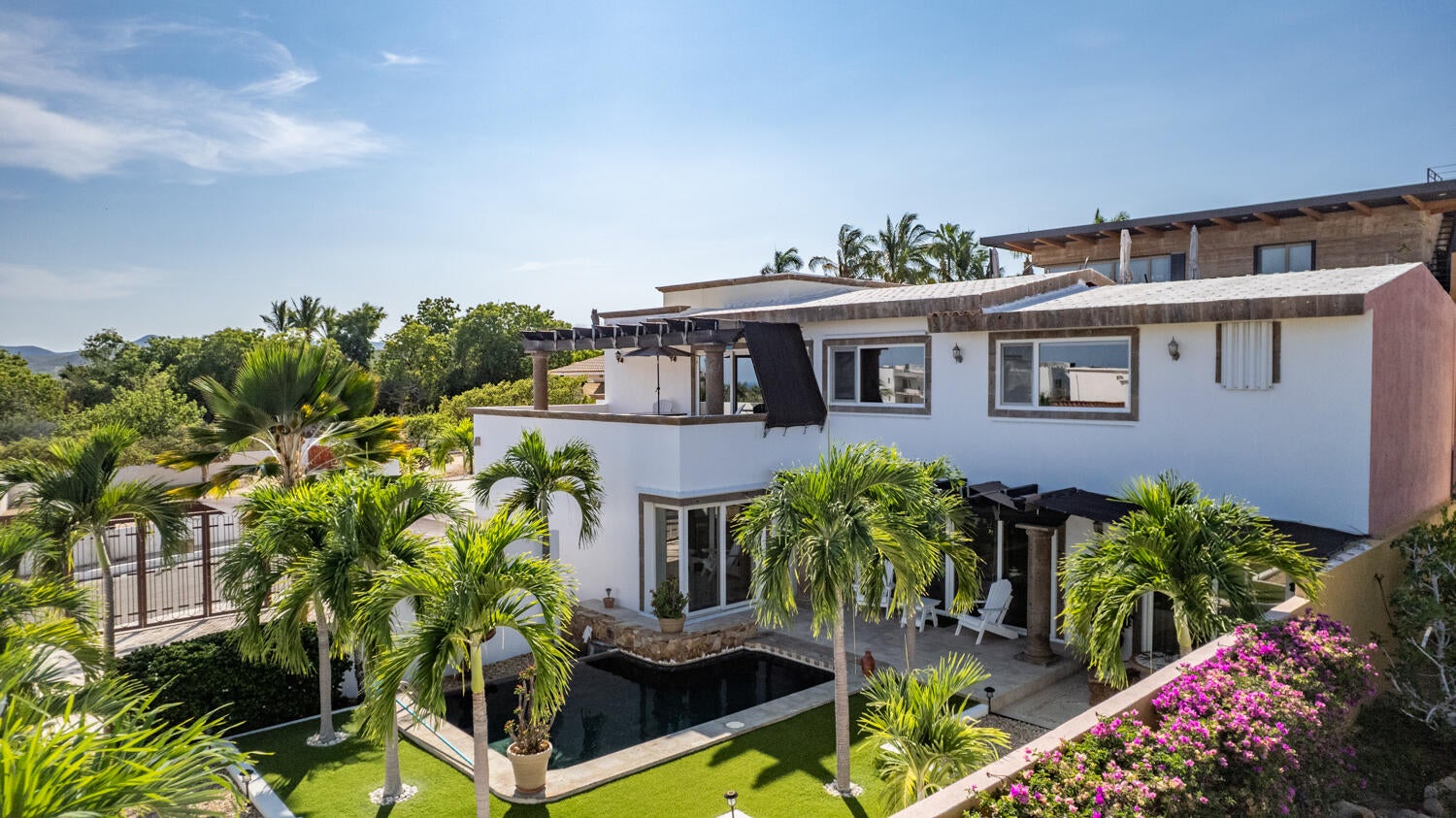
The terrace holds twelve. The pool is cold in the mornings and warm by noon. The Sea of Cortez is visible from every place you'd want to sit. On clear nights — most nights — the lights of Cabo blink in the distance and something about it feels earned.
Because it is.
The fourth thing that changes is quieter than the rest. It's not something you post. It's the moment you're sitting on the upper deck on a Tuesday morning, coffee getting cold, watching a humpback surface past Chileno Bay — and you realize this is not a vacation. This is just where you live now. Part of the time. But fully.
Not everyone gets here. Most people talk about it. Some people look at listings. A few book a flight to take a look.
And then there's the one who buys it.
That person exists in a different category. Not better — just different. The kind of person who decided what they wanted and went and got it, before someone else did.
That's the Corridor Insider. And there's only one of this house. For only one of you.
This property isn't for the buyer who wants the obvious choice. The ones who pay $120,000 a year in HOA fees for the right address and then wonder why they never feel ahead.
It's for the buyer who did the research. Who ran the numbers. Who understood that a view worth paying for is only worth paying for if it's still there in ten years — and that the infrastructure behind the walls matters more than the name above the gate. The one who moves while everyone else is still talking about it. That buyer has a name on this corridor. The Corridor Insider. There's only one of this house. There's only one of you.
This listing has drawn inquiries from buyers across the US, Canada, Mexico, the UK, and as far as Singapore. The Los Cabos corridor is not a local secret anymore. The people doing their homework globally have found it. The question is whether the right buyer moves before someone else does.
"This is one of the few listings on the corridor where the view argument is backed by federal law, not just by what's standing there today. When buyers understand what the arroyo protection means for the Chileno Bay sightline — that it genuinely cannot be built away — the conversation changes. Add zero HOA by title and owner-built infrastructure at this price, and there is nothing else like it on the corridor."
The owner has lived here full-time for eight and a half years. He built it to stay in it forever and maintained it exactly that way. He is not testing the market. He is not leaving because of the property or the corridor — he built this for himself and loved every year in it. Life took him elsewhere. His loss is the kind of opportunity that only appears once. The number is $1,225,000. Everything inside the house stays — furniture, appliances, televisions, outdoor furniture, linens. He is ready to close, and can do so in as little as two weeks.
Before you book a showing, here is what every other photo on this page hasn't shown you.


In case you skipped straight here — the owner built this for himself with no plan to sell. Three independent septic systems. German double-pane windows. $30,000 in Florida hurricane shutters. 10,000-liter water tank with backup pumps and two-stage filtration. Eight and a half years of personal, full-time care. You feel it the moment you walk in — and you can verify every detail before you make an offer.
The Chileno Bay sightline cannot be built away. Ever. A legal arroyo — classified as a Bien Nacional under Article 27 of the Mexican Constitution — sits between this house and the bay. Nothing can be constructed within that federal zone. The view you see from the upper terrace today is the view the next owner sees in 2045. On a corridor where most listings sit next to vacant land that can disappear overnight behind a permit, that is worth very careful attention.
The asking price is $1,225,000 — fully furnished, everything included. Three years ago, three contractors quoted $1.1 million just to build the concrete structure. Not the land. Not the pool. Not the shutters or the windows or the views. Today you cannot replicate this property for under $2 million. The owner is relocating internationally and is ready to move. If you've been serious about the Los Cabos corridor, this is the one to look at. Reach out below and let's talk.
Sebastian will reach out personally within 24 hours. No pressure. No spam. Just a conversation about whether this is the right property for you.